Campus Fire Safety Compliance: Inspections, Roles, and Best Practices
Ensuring fire safety on a college or university campus requires more than equipment and policies. Compliance with fire codes, regulations, and internal protocols forms the backbone of a safe campus. When responsibilities are clearly defined, inspections are thorough, and best practices are followed, campuses reduce risk and protect students, faculty, staff, and property. Even small oversights can lead to significant hazards if roles are unclear or procedures are inconsistent.
Why Compliance Matters
Compliance is not simply about avoiding fines or passing inspections. It is a proactive strategy to protect the entire campus community. A compliant campus ensures that fire safety equipment is operational, emergency procedures are up to date, and everyone knows how to respond in an emergency. Without clear compliance measures, confusion can arise during drills or real incidents, potentially putting lives at risk. A structured approach to inspections and accountability reduces uncertainty, builds confidence, and promotes a culture of safety.
Defining Clear Roles
Effective fire safety depends on assigning clear responsibilities across departments. Facility managers oversee inspections, coordinate audits, and maintain accurate records of safety systems. Campus safety officers regularly check buildings, monitor alarm systems, and ensure day-to-day operations align with fire safety protocols. Residence life staff and student leaders act as liaisons, helping residents understand emergency procedures and guiding them during drills. Faculty and department heads reinforce safety expectations in classrooms and offices. In specialized spaces such as laboratories, IT and lab managers ensure that chemical storage and equipment follow strict safety guidelines.
Clear assignment of responsibilities means everyone knows what they are accountable for. During a drill or real event, this coordination allows for faster responses, minimizes confusion, and ensures the campus operates efficiently. For example, if a lab alarm triggers, the assigned safety officer can assess the situation, while the lab manager ensures chemicals are secured and evacuation routes remain accessible.
Inspections and Maintenance
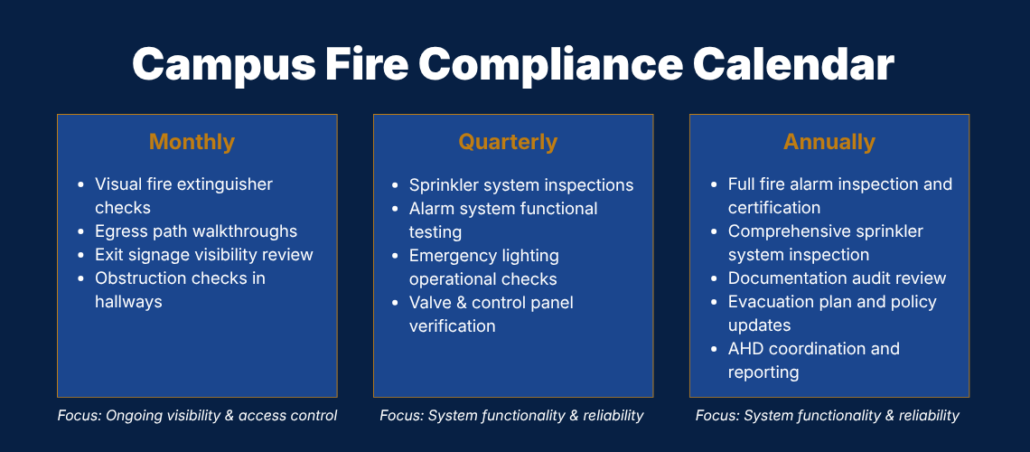
Regular inspections are critical to compliance. Fire alarms, smoke detectors, sprinklers, and extinguishers
must be tested on a consistent schedule. Buildings should be checked for blocked exits, obstructed hallways, and potential fire hazards. Documenting inspections not only meets regulatory requirements but also provides a history of preventative measures. This information can highlight recurring issues, such as malfunctioning alarms or outdated equipment, allowing administrators to take corrective action before an emergency occurs.Regular inspections also ensure alignment with local AHJ and fire marshal requirements.
Implementing Best Practices
Best practices go beyond inspections. Regular training sessions for staff, faculty, and student leaders ensure everyone knows their role and the procedures to follow. Simulated drills, including realistic scenarios such as a fire during a crowded event or an obstruction in a key exit, help participants practice critical decision-making skills. Policies should be reviewed and updated annually to reflect changes in campus layouts, occupancy, and regulatory standards. Ongoing communication and feedback loops ensure that safety remains an active and evolving priority.
Creating a Culture of Accountability
Compliance works best when it becomes part of the daily campus culture. Students should feel empowered to report potential hazards, and staff should be encouraged to participate actively in training and drills. Recognizing individuals who demonstrate commitment to safety can further reinforce these behaviors. For instance, highlighting a resident advisor who proactively educates students about fire safety policies or a department head who ensures lab equipment is checked regularly encourages others to adopt the same level of diligence. When leadership visibly supports these efforts, accountability becomes embedded across campus operations.
Conclusion
Fire safety compliance is more than a series of checklists; it is a framework for accountability, preparedness, and risk reduction. By clearly defining roles, conducting thorough inspections, and implementing best practices, campuses protect the people who live, learn, and work within them. A culture that embraces compliance ensures that fire safety is a shared responsibility, and emergencies are managed with confidence and precision.
Contact National Fire & Safety to streamline your campus compliance program and ensure your fire safety systems and procedures meet all standards.