Fire Safety for Hospitals, Clinics, and Patient-Care Environments
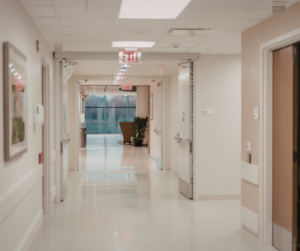
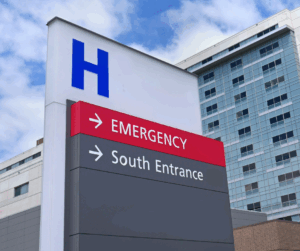
In healthcare settings, a fire emergency threatens more than property. It endangers individuals who may be unable to self-evacuate. Facilities like hospitals and nursing homes require fire safety systems that provide early detection, explicit notification, and dependable suppression.
We design, install, inspect, repair, and monitor systems built to support essential healthcare operations, such as:
- Pharmacies and labs.
- Patient rooms and care wings.
- Imaging and diagnostic areas.
- Operating rooms and surgical suites.
- Long-term care and assisted living facilities.
At National Fire & Safety, we provide annual inspections, repairs and maintenance, and rapid response times. Our team ensures every system supports safe egress, continuous operation of essential equipment, and compliance with the latest healthcare fire protection codes.
Hospital-Grade Fire Alarm and Notification Systems
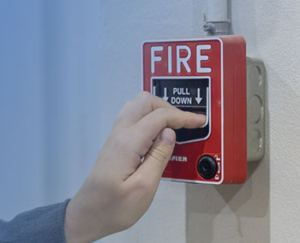
Reliable early-warning detection is critical in healthcare environments. National Fire & Safety offers comprehensive fire alarm solutions for hospitals and medical campuses, including system design, installation, programming, and ongoing inspections.
Your fire alarm system plays a central role in:
- Alerting staff to initiate emergency procedures.
- Meeting National Fire Protection Association (NFPA), Centers for Medicare & Medicaid Services (CMS), and Joint Commission requirements.
- Supporting orderly evacuation or defend-in-place protocols.
- Integrating with access control, elevators, and emergency power systems.
Whether you need a new fire alarm system for hospitals or require ongoing maintenance for your existing infrastructure, we deliver compliant solutions tailored to your facility’s needs.
Healthcare Fire Sprinkler and Suppression Systems
Hospitals, clinics, and nursing homes depend on suppression systems to help control a fire. We provide comprehensive solutions for healthcare fire sprinkler systems, including wet, dry, pre-action, and specialized configurations tailored to sensitive environments.
Our services include:
- Repairs, testing, and emergency response.
- System design for new construction and retrofit.
- Annual and semiannual inspections required for accreditation.
- Installations that support medical equipment layouts and building constraints.
Whether you need a hospital sprinkler system upgrade or full-facility replacement, our team delivers high-quality craftsmanship backed by unwavering vigilance.
Life Safety Compliance for Healthcare Facilities
Healthcare fire protection is tightly regulated, and National Fire & Safety helps your facility remain ready for every audit, inspection, and accreditation cycle.
We assist with:
- Documentation management.
- NFPA 99 and NFPA 101 requirements.
- 24/7 monitoring for continuous oversight.
- Deficiency correction and system upgrades.
- CMS and Joint Commission fire safety compliance.
Why Healthcare Facilities Trust National Fire & Safety
Healthcare environments operate under precise standards, and so do we. Facilities managers and safety leaders rely on us because we provide:
- Rapid emergency response.
- Over 70 years of industry expertise.
- Tailored solutions for complex patient-care environments.
- Clear communication and compliance-focused documentation.
- A single trusted partner for alarms, sprinklers, inspections, repairs, and monitoring.
Request a Consultation
At National Fire & Safety, we help you limit liability, reduce risk, and maintain confidence in your fire and life safety systems. Protect your patients, staff, and facility with a fire protection partner you can count on. Request your free quote to get started.
Fire Code Violations and Deficiencies That Put Your Facility at Risk
Fire Safety[5 min read]
Most facility managers assume a fire inspection is a conversation. An inspector walks through, notes a few things, you fix them over the next few weeks, and you move on. That’s how it works for minor deficiencies.
But some violations don’t work that way. Certain fire code findings result in an automatic failure: no grace period, no “we’ll check back in 30 days.” Your facility is non-compliant the moment the inspector documents it, and the clock starts immediately.
If you don’t know which violations fall into that category, you’re managing your fire and life safety program with a blind spot that could cost you your certificate of occupancy, trigger an insurance claim denial, or in the worst case, put people at risk.
Here’s what you need to know.
Note: Fire code enforcement is administered by the authority having jurisdiction (AHJ) in your area. While the violations below are grounded in widely adopted NFPA standards, specific requirements and classifications may vary by state or municipality.
Why Some Violations Carry More Weight Than Others
Fire codes distinguish between deficiencies based on how directly they affect life safety in an emergency. The National Fire Protection Association (NFPA) standards, adopted in whole or in part by most jurisdictions, classify impairments differently depending on the system involved and the severity of the condition.
Some conditions are structural failures: if they exist, your facility cannot be certified as protected. Others are serious deficiencies that require prompt attention and will affect your inspection outcome, even if the path to resolution looks slightly different.
The specific threshold varies by jurisdiction and authority having jurisdiction (AHJ), but the categories below are widely recognized as critical-level findings across most inspections.
Violations and Deficiencies That Put Your Facility at Risk
Impaired or non-functioning fire suppression systems
A sprinkler system that has been shut off, has a closed control valve, or is otherwise out of service is not a minor deficiency. It is an impairment. NFPA 25 requires immediate action when a water-based suppression system is impaired, including notifying the AHJ, implementing a fire watch, and restoring service without delay. An inspector who finds a suppression system out of service during a scheduled inspection will document it as a critical impairment. There is no passing that inspection.
This includes partially impaired systems. A single zone that’s been taken offline “temporarily” while construction happens in that wing is still an impairment, and still an automatic failure for that area.
Fire alarm systems that are non-operational or silenced
A fire alarm panel in trouble mode is not the same as a panel that is offline, but the line between them matters. If your fire alarm system cannot initiate, transmit, or notify during an inspection, the facility fails. Silenced panels, disconnected notification appliances, and systems in bypass create the same problem: occupants cannot be alerted and emergency dispatch cannot be triggered.
Blocked or obstructed fire exits
This one surprises facility managers more often than it should. NFPA 101, the Life Safety Code, requires means of egress to be continuously maintained free of obstructions. Storage in stairwells, furniture against emergency exits, locked exit doors without the required hardware, or anything that impedes egress in a required exit path is a life safety violation. Inspectors treat these as immediate failures because a blocked exit in a real emergency doesn’t give you time to explain why it happened.
Fire doors that don’t latch or self-close
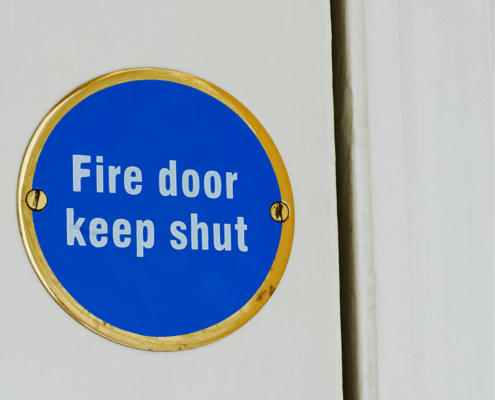
Fire doors are rated assemblies. Their entire function is to compartmentalize fire and smoke so occupants can evacuate and responders can contain the emergency. A fire door that has been propped open, has a broken closer, or doesn’t latch fully into the frame is a failed assembly, not a “maintenance item to schedule.” AHJs consistently flag inoperable fire doors as critical deficiencies requiring immediate correction.
Fire extinguisher deficiencies
Portable fire extinguishers are required life safety devices, and their condition is always part of a thorough inspection. The severity of a finding depends on the specific condition: a missing extinguisher or a fully discharged unit represents a more critical deficiency than an expired annual service tag or a broken tamper seal, which are still findings that need to be addressed but carry a different weight. Inspectors document all of these, and a pattern of neglected extinguisher maintenance reflects on the overall condition of your program.
Penetrations in fire-rated walls or assemblies
This one is frequently left behind by construction or renovation work. When contractors run conduit, pipes, or cabling through fire-rated walls and fail to properly seal the penetrations with listed firestop systems, they create a path for fire and smoke to travel through the barrier. Those unsealed penetrations compromise the rating of the entire assembly and will result in a critical deficiency on inspection.
Electrical deficiencies in protected spaces
Electrical conditions that create direct fire risk, particularly in areas with fire suppression or alarm equipment, are treated as serious findings. Open knockouts in electrical panels, double-tapped breakers in critical systems, and exposed wiring in mechanical rooms are common examples that inspectors flag as deficiencies requiring prompt remediation.
The Part That Catches Most Facilities Off Guard
None of the above require an unusual event or catastrophic neglect to show up in a routine inspection. Blocked exits accumulate over time as storage habits shift. Fire door closers wear out. Sprinkler control valves get shut off during maintenance and never properly reopened. Penetrations get created during a renovation that happened two years ago.
Facilities that struggle with inspections usually don’t get there because they were careless. It’s because they didn’t have a systematic program in place to catch these conditions before an inspector did.
What a Systematic Program Actually Looks Like
Passing inspection isn’t the goal. Being inspection-ready, every day, is the goal. There’s a meaningful difference.
A reactive approach means you prepare when an inspection is coming, fix what gets flagged, and repeat. A proactive program means ongoing documentation, scheduled internal walkthroughs, a deficiency tracking system with priority classifications, and a service relationship with a licensed fire and life safety provider who knows your facilities and catches issues before they become violations.
That’s what National Fire & Safety delivers. Our technicians are trained to identify critical conditions, document them with severity classifications, and in many cases, remediate them without delay. We’ve been doing this for over 70 years, and we understand the difference between a finding you can manage over time and one that requires immediate action.
If you’re not certain your facility would pass an unannounced inspection today, that uncertainty is worth addressing now, not after someone hands you a failed report.
Schedule a facility assessment with NFS. We’ll walk your space, identify your risk areas, and give you a clear picture of where you stand before an inspector does.
One Month of Awareness. Twelve Months of Safety.
Fire Safety[5 min read]
The best facilities teams don’t wait for June to think about fire and life safety. While others are pulling out their checklists, they’re already running: scheduled, documented, and consistent without anyone having to chase it down. National Safety Month is a moment they recognize, not a reminder they need.
What makes that possible isn’t a bigger budget or a larger team. It’s structure. And it’s more achievable than most people think.
What Great Safety Operations Have in Common
The facilities teams that handle fire and life safety exceptionally well tend to share a few things. Not unlimited budgets. Not massive staffing. What they have is structure: a set of habits and systems that make consistent safety the path of least resistance.
It looks something like this:
Inspections are already on the calendar. Before a service visit ends, the next one is scheduled. There’s no scramble, no lapsed intervals, no question about what’s been tested and when. The compliance calendar runs itself because someone built it to.
Deficiencies move quickly. When something gets flagged, there’s a defined path for resolving it: who owns it, what the timeline looks like, and how it gets confirmed complete. Things get handled.
Documentation is ready when it’s needed. Whether it’s leadership asking a question, an insurer requesting records, or a regulator on site, the answers are current and accessible. Everything is right where it should be.
The vendor relationship runs deep. The best facilities teams work with service providers who know their buildings, their history, and their compliance obligations. That continuity pays off in ways that are hard to quantify until you’ve experienced it.
Why June Is Still Worth Recognizing
Even teams with strong safety systems find value in National Safety Month. It’s a useful moment to step back, assess the full picture, and confirm that the systems they’ve built are still serving them well.
It’s also a good time to recognize what’s working. Teams that have invested in building a strong safety culture deserve to take stock of that progress. June is a worthwhile occasion to do exactly that.
The Operating Philosophy Behind It All
What separates these teams isn’t any single practice. It’s the underlying mindset: safety as an operating condition, not an annual event. It’s part of how the building runs every day, not something that gets attention when a calendar prompts it.
Getting there doesn’t require a reinvention. It usually starts with finding the right partner, building a service schedule that runs on its own, and putting systems in place that make the consistent thing also the easy thing.
That’s the kind of safety culture worth building. And National Safety Month is as good a time as any to commit to it.
Ask your NFS representative about building a service plan that keeps your facility covered all year long.
Is Your Facility Ready for a Joint Commission Survey? What Healthcare Facilities Need to Know About Fire & Life Safety Compliance
Healthcare[5 min read]
Joint Commission surveys don’t come with a warning. That’s by design. And when inspectors walk through your doors, your fire and life safety systems need to be ready. Not almost ready. Not “we’re working on it” ready. Ready.
For healthcare facility managers and operations teams, Joint Commission (JCO) accreditation isn’t a box-checking exercise. It’s an ongoing program of documentation, inspection, and rapid response that directly impacts your accreditation status and, ultimately, patient care. Fire and life safety compliance is one of the most common areas where facilities fall short. Here’s what you need to know.
What the Joint Commission Actually Inspects
The Joint Commission evaluates fire and life safety through its Environment of Care (EC) and Life Safety (LS) standards, which are rooted in NFPA 101 (the Life Safety Code) and NFPA 99 (the Health Care Facilities Code).
During a survey, inspectors will assess:
The common thread? Documentation. The Joint Commission doesn’t just want to see that your systems work. They want a paper trail proving it.
The Red-Yellow-Green Reality of Deficiency Management
Not all deficiencies are created equal. Experienced fire and life safety teams often think about findings using a three-tier system:
Red: Immediate Action Required
These are critical deficiencies that compromise life safety. We’re talking inoperable fire alarm devices, failed suppression components, or blocked egress paths. Under JCO standards, critical deficiencies typically must be remediated within 24 to 48 hours. That’s not a suggestion. That’s the window between maintaining your accreditation and receiving a finding that requires a formal corrective action plan.
Yellow: Address Before Your Next Survey
These aren’t emergencies, but they’re not something to ignore. A yellow finding says this will become a red if you don’t act. Think worn components, documentation gaps, or equipment nearing end of service life.
Green: Compliant, Documented, Moving On
Your facility passed this one. Keep the records. Repeat the inspection on schedule.
The challenge for most healthcare facilities isn’t identifying red findings. It’s having a remediation plan ready to execute the moment one is discovered.
Why Response Time Is Everything
Here’s the scenario no facility manager wants to face: an inspection reveals a critical deficiency on a Thursday afternoon. The JCO remediation clock starts immediately. You need a qualified technician on-site, the right part in hand, and completed documentation by Saturday morning.
That’s only possible if your service partner has:
At NFS, a majority of critical deficiencies we discover are remediated the same day. Our technicians carry van stock and operate under pre-approved repair authorization for participating facilities.
For facilities that want this built into a formal program, our Preferred Partner Program covers pre-authorized repairs, priority dispatch, and locked-in rates.
HIPAA Doesn’t Stop at the Front Desk
Fire safety inspections in healthcare environments require an added layer of sensitivity that doesn’t apply in other industries. Your service provider’s technicians are moving through patient care areas, staff corridors, and utility spaces where protected health information (PHI) is visible, audible, or accessible.
Compliance with HIPAA isn’t just your responsibility. It extends to every vendor and contractor on your premises. When evaluating a fire and life safety partner, ask:
At NFS, every site visit is announced, documented, and conducted with full awareness of the privacy requirements unique to healthcare environments.
The Documentation Gap: Where Facilities Most Often Fail
In conversations with healthcare operations teams across the region, one theme comes up again and again: the paperwork is the problem.
Many facilities have functional fire and life safety systems. What they lack is the organized, accessible, audit-ready documentation that Joint Commission surveyors expect. That means:
If your current vendor hands you a paper invoice and calls it documentation, you may be one survey away from a finding.
Building a JCO-Ready Program
Here’s what a strong Joint Commission fire and life safety program looks like in practice:
Ready to Evaluate Your Current Program?
If you’re not certain your fire and life safety partner is built to support JCO compliance (the documentation, the response times, the pre-authorized repair protocols), it may be time for a conversation.
NFS works with healthcare facilities across the region to build inspection and maintenance programs designed around Joint Commission standards. We understand the timeline pressures, the documentation requirements, and the stakes involved when a surveyor walks through your door.
Ready to build a JCO-ready program?
National Fire & Safety (NFS) provides fire alarm, suppression, and life safety services to healthcare, education, commercial, and industrial facilities. Learn more about our healthcare compliance programs.