Fire Safety for Hospitals, Clinics, and Patient-Care Environments
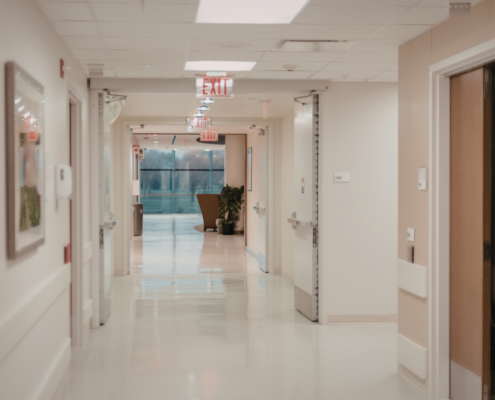
In healthcare settings, a fire emergency threatens more than property. It endangers individuals who may be unable to self-evacuate. Facilities like hospitals and nursing homes require fire safety systems that provide early detection, explicit notification, and dependable suppression.
We design, install, inspect, repair, and monitor systems built to support essential healthcare operations, such as:
- Pharmacies and labs.
- Patient rooms and care wings.
- Imaging and diagnostic areas.
- Operating rooms and surgical suites.
- Long-term care and assisted living facilities.
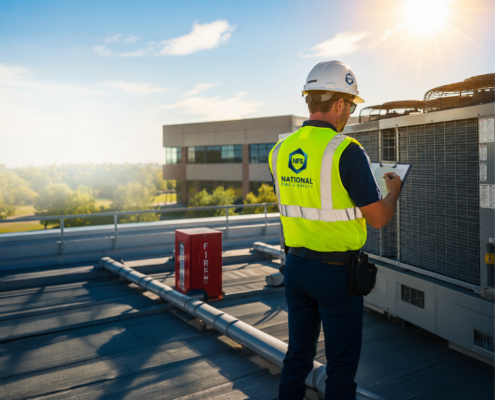
At National Fire & Safety, we provide annual inspections, repairs and maintenance, and rapid response times. Our team ensures every system supports safe egress, continuous operation of essential equipment, and compliance with the latest healthcare fire protection codes.
Hospital-Grade Fire Alarm and Notification Systems
Reliable early-warning detection is critical in healthcare environments. National Fire & Safety offers comprehensive fire alarm solutions for hospitals and medical campuses, including system design, installation, programming, and ongoing inspections.
Your fire alarm system plays a central role in:
- Alerting staff to initiate emergency procedures.
- Meeting National Fire Protection Association (NFPA), Centers for Medicare & Medicaid Services (CMS), and Joint Commission requirements.
- Supporting orderly evacuation or defend-in-place protocols.
- Integrating with access control, elevators, and emergency power systems.
Whether you need a new fire alarm system for hospitals or require ongoing maintenance for your existing infrastructure, we deliver compliant solutions tailored to your facility’s needs.
Healthcare Fire Sprinkler and Suppression Systems
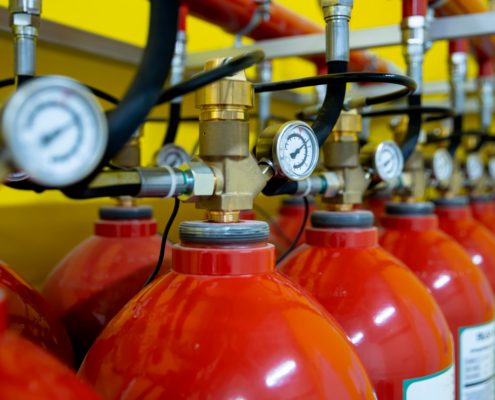
Hospitals, clinics, and nursing homes depend on suppression systems to help control a fire. We provide comprehensive solutions for healthcare fire sprinkler systems, including wet, dry, pre-action, and specialized configurations tailored to sensitive environments.
Our services include:
- Repairs, testing, and emergency response.
- System design for new construction and retrofit.
- Annual and semiannual inspections required for accreditation.
- Installations that support medical equipment layouts and building constraints.
Whether you need a hospital sprinkler system upgrade or full-facility replacement, our team delivers high-quality craftsmanship backed by unwavering vigilance.
Life Safety Compliance for Healthcare Facilities
Healthcare fire protection is tightly regulated, and National Fire & Safety helps your facility remain ready for every audit, inspection, and accreditation cycle.
We assist with:
- Documentation management.
- NFPA 99 and NFPA 101 requirements.
- 24/7 monitoring for continuous oversight.
- Deficiency correction and system upgrades.
- CMS and Joint Commission fire safety compliance.
Why Healthcare Facilities Trust National Fire & Safety
Healthcare environments operate under precise standards, and so do we. Facilities managers and safety leaders rely on us because we provide:
- Rapid emergency response.
- Over 70 years of industry expertise.
- Tailored solutions for complex patient-care environments.
- Clear communication and compliance-focused documentation.
- A single trusted partner for alarms, sprinklers, inspections, repairs, and monitoring.
Request a Consultation
At National Fire & Safety, we help you limit liability, reduce risk, and maintain confidence in your fire and life safety systems. Protect your patients, staff, and facility with a fire protection partner you can count on. Request your free quote to get started.





Summer Fire & Life Safety Preparedness: A Practical Guide
Fire Safety[5 min read]
Summer is hard on buildings. Extended heat, increased occupancy from seasonal staff, outdoor events, and maintenance that gets pushed to “when things slow down” all come together between June and September to put additional strain on fire and life safety systems.
For facility managers, summer isn’t just another season. It’s an operational test. Here’s how to approach it.
Why Summer Is a High-Risk Period for Fire & Life Safety Systems
Most fire and life safety failures don’t happen dramatically. They happen gradually. A component that’s been running warm all year finally fails during a 95-degree week in August. A sprinkler head that got bumped during an HVAC installation back in April. A fire door propped open because the east wing’s air conditioning is struggling and staff are trying to get a cross-breeze.
Summer amplifies all of it:
Heat stress on electrical components: Fire alarm panels, notification appliances, and suppression system components all have thermal tolerances. Sustained high temperatures, especially in mechanical rooms and utility spaces that don’t receive the same cooling attention as occupied areas, can accelerate component wear and cause false activations or outright failures.
Increased system demand: HVAC systems running at capacity can interfere with smoke detection in ways that aren’t present during cooler months. Dust and debris from increased ventilation activity can foul detector heads.
Construction and renovation season: More facilities schedule major work for summer. That means more contractors, more penetrations in fire-rated assemblies, more temporary systems, and more opportunities for something to get disconnected and not reconnected correctly.
Outdoor and campus events: Summer often brings outdoor gatherings, tent structures, and temporary occupancies that introduce fire risk in areas not covered by your standard inspection program.
Deferred maintenance coming due: That backflow preventer you’ve been watching? The panel battery showing a fault? Summer is when deferred items tend to become urgent ones.
The Summer Inspection Checklist
Not every facility can do everything before Memorial Day. Here’s how to triage:
Tier 1: Do These Before June
Tier 2: Address During June–July
Tier 3: Document and Monitor Through August–September
Emergency Response Readiness: Summer-Specific Considerations
Beyond the physical systems, summer preparedness means making sure your team knows what to do when something goes wrong, because response plans that work fine in February may have gaps in August.
Staffing fluctuations: Summer vacation schedules mean your facilities team may be running with coverage staff who aren’t familiar with your system layout or response protocols. Make sure your fire panel room, utility cutoffs, and system documentation are clearly labeled and accessible.
Extended daylight and altered schedules: Shift changes, business hours, and event schedules shift in summer. Your emergency response plan should account for peak occupancy periods that may differ from the rest of the year.
Utility coordination: If a critical repair requires a system shutdown, scheduling utility contractors in summer is harder. Build lead time into your planning.
How a Preferred Partner Program Changes Your Summer Preparation
One of the most consistent patterns we see among facilities that handle summer well versus those that scramble: the prepared ones aren’t doing more work. They’re doing it earlier, and they’re doing it with a partner who has capacity reserved for them.
NFS’s Preferred Partner Program was built for exactly this. Priority scheduling means your facility doesn’t compete with everyone else who calls in June after realizing their inspection is overdue. Locked-in labor rates keep your summer maintenance budget predictable, even when demand increases, with annual increases capped for the first two years. You also receive 15% off materials for any repairs identified during inspections, along with preferred labor rates for service work.
For facilities where an AHJ inspection can happen with little notice and deficiencies often need to be resolved quickly, having a priority-access partner in place before summer begins isn’t just convenient. It’s a practical way to stay ahead of compliance requirements.
A Note on Documentation
Whatever you do this summer, document it. Every inspection, every finding, every repair. Undocumented work is, for compliance and liability purposes, work that didn’t happen.
Make sure your vendor is providing documentation that includes:
If you’re not getting this from your current provider, ask why.
Start Summer Prepared, Not Reactive
The facilities teams that navigate summer best are the ones who treated spring as their prep window. If you’re reading this in May, you’re not too late, but the calendar is moving.
NFS is currently scheduling summer inspections for commercial, industrial, educational, and multi-use facilities across the region. Priority slots are reserved for Preferred Partner clients, but we have capacity for new facility assessments.
Schedule your summer inspection assessment today.
Summer Fire & Life Safety Preparedness for Healthcare Facilities: A Practical Guide
Healthcare[5 min read]
Summer is hard on buildings. Extended heat, increased occupancy from seasonal staff, outdoor events, and maintenance that gets pushed to “when things slow down,” which in healthcare rarely happens, all come together between June and September to put additional strain on fire and life safety systems.
For healthcare facility managers, summer isn’t just another season. It’s an operational test. Here’s how to approach it.
Why Summer Is a High-Risk Period for Fire & Life Safety Systems
Most fire and life safety failures don’t happen dramatically. They happen gradually, like a component that’s been running warm all year finally fails during a 95-degree week in August. A sprinkler head that got bumped during an HVAC installation back in April. A fire door propped open because the east wing’s air conditioning is struggling and staff are trying to get a cross-breeze.
Summer amplifies all of it:
The Summer Inspection Checklist
Not every facility can do everything before Memorial Day. Here’s how to triage:
Tier 1: Do These Before June
Tier 2: Address During June–July
Tier 3: Document and Monitor Through August–September
Emergency Response Readiness: Summer-Specific Considerations
Beyond the physical systems, summer preparedness includes making sure your team knows what to do when something goes wrong because response plans that work fine in February may have gaps in August.
How a Preferred Partner Program Changes Your Summer Preparation
One of the most consistent patterns we see among healthcare facilities that handle summer well versus those that scramble: the prepared ones aren’t doing more work; they’re doing it earlier, and they’re doing it with a partner who has capacity reserved for them.
NFS’s Preferred Partner Program was built for exactly this. Priority scheduling means your facility does not compete with everyone else who calls in June after realizing their inspection is overdue. Locked-in labor rates help keep your summer maintenance budget predictable, even when demand increases, with annual increases capped for the first two years. You also receive 15% off materials for any repairs identified during inspections, along with preferred labor rates for service work.
For healthcare facilities, where a Joint Commission survey can happen at any time and critical deficiencies often need to be resolved within 24 to 48 hours, having a priority-access partner in place before summer begins is not just convenient. It is a practical way to stay aligned with compliance expectations.
A Note on Documentation
Whatever you do this summer, document it. Every inspection, every finding, every repair. If you’re a JCO-accredited facility, you already know this. But it bears repeating: undocumented work is, for accreditation purposes, work that didn’t happen.
Make sure your vendor is providing documentation that includes:
If you’re not getting this from your current provider, ask why.
Start Summer Prepared, Not Reactive
The facilities teams that navigate summer best are the ones who treated spring as their prep window. If you’re reading this in June, you’re not too late but the calendar is moving.
NFS is currently scheduling summer inspections for healthcare, higher education, and commercial facilities across the region. Priority slots are reserved for Preferred Partner clients, but we have capacity for new facility assessments.
Proactive Fire Safety Planning for Higher Education Campuses
Higher Education[6 min read]
Fire safety is most effective when it is forward-looking and strategic. Proactive planning reduces risk, protects property, and ensures that students, faculty, and staff are prepared for emergencies. By anticipating potential hazards, collaborating with experts, and continuously improving systems, campuses create a culture of preparedness that protects everyone and fosters confidence across the community.
Assessing Campus Risks
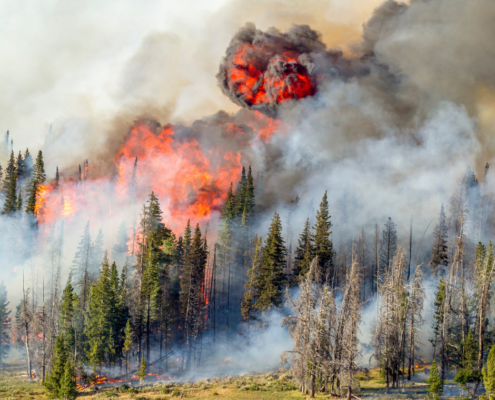
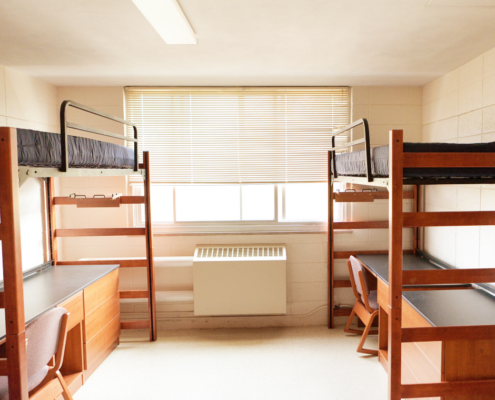
Each higher education campus is unique, and fire safety planning begins with a thorough assessment of risks. Residential halls, laboratories, kitchens, and high-occupancy classrooms require particular attention due to their higher likelihood of accidents. Event spaces, auditoriums, and gyms also present challenges because of their variable occupancy and complex layouts. Seasonal factors, such as wildfire risk in regions like Arizona, Texas, Utah, and Colorado, should also be considered when developing a comprehensive plan. By mapping these risks, administrators can prioritize resources effectively and identify areas where additional preventive measures or specialized training are necessary.
Risk assessment should include evaluating human behavior as well as physical hazards. For example, how likely are students to leave appliances unattended in dorms? Are laboratory chemicals stored safely? Do large gatherings create bottlenecks at emergency exits? Understanding these dynamics allows the campus to implement proactive measures that prevent incidents before they occur.
Collaboration with Experts
Fire safety is not a solo effort. Collaboration with local fire departments, certified safety professionals, and specialized consultants strengthens preparedness and ensures that protocols align with the latest standards. Joint training sessions, inspections, and audits help identify gaps in coverage, improve response times, and provide practical insights for staff and students. Even without past incidents, campuses can see the benefit of these partnerships through improved drills, faster emergency response, and a higher level of confidence across the community.
Collaboration also fosters communication between departments. Facility managers, campus safety officers, faculty, and residence life staff work together to ensure that policies are understood and enforced consistently. By maintaining open communication channels, campuses can adapt quickly to changes in building occupancy, construction, or staffing that may affect fire safety.
Leveraging Technology
Modern campuses have a range of technological tools that enhance fire safety. Automated alarms, IoT sensors monitoring occupancy or environmental conditions, and software for inspections and maintenance allow campuses to detect issues before they become emergencies. For example, sensors can alert maintenance teams to overheating appliances in dorms or detect smoke in under-monitored areas. Digital records of inspections, training sessions, and drills streamline compliance and help administrators identify trends and areas for improvement. Technology complements human oversight, creating a more robust and reliable safety network.
Continuous Improvement
Fire safety planning is not static. Procedures must be regularly reviewed and updated to reflect new construction, renovations, changes in occupancy, or evolving regulations. Drills should be repeated periodically and adapted to reflect different scenarios, such as fires in laboratories, residence halls, or high-traffic events. Feedback from students, faculty, and staff helps identify potential weaknesses and provides opportunities to refine procedures. Continuous improvement ensures that campuses remain prepared as they grow and change, fostering confidence and resilience throughout the community.
Fostering a Culture of Preparedness
A proactive plan is only effective if the campus community embraces it. Education, awareness, and engagement are critical to ensuring that students, faculty, and staff understand their roles. Regular communication, signage, workshops, and participation in drills reinforce the importance of safety as part of daily life. Recognizing proactive behaviors and providing incentives for engagement encourages everyone to take ownership of fire safety, transforming it from a requirement into a shared value.
Conclusion
Proactive fire safety planning protects lives, property, and the campus community as a whole. By assessing risks, collaborating with experts, leveraging technology, and committing to continuous improvement, campuses create resilient safety programs that prepare students, faculty, and staff for emergencies. A forward-looking approach ensures that the campus can respond effectively to any incident while reducing the likelihood of fires and minimizing potential damage.
Contact National Fire & Safety to develop a customized, proactive fire safety plan for your campus.