Fire Safety for Hospitals, Clinics, and Patient-Care Environments
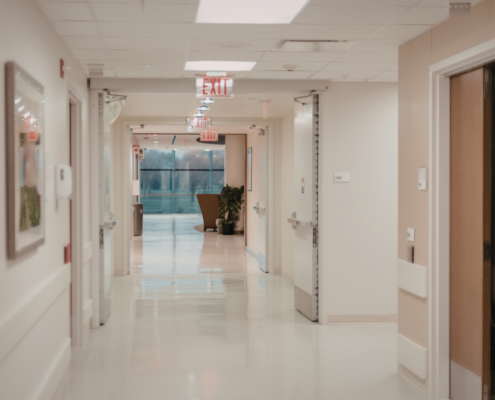
In healthcare settings, a fire emergency threatens more than property. It endangers individuals who may be unable to self-evacuate. Facilities like hospitals and nursing homes require fire safety systems that provide early detection, explicit notification, and dependable suppression.
We design, install, inspect, repair, and monitor systems built to support essential healthcare operations, such as:
- Pharmacies and labs.
- Patient rooms and care wings.
- Imaging and diagnostic areas.
- Operating rooms and surgical suites.
- Long-term care and assisted living facilities.
At National Fire & Safety, we provide annual inspections, repairs and maintenance, and rapid response times. Our team ensures every system supports safe egress, continuous operation of essential equipment, and compliance with the latest healthcare fire protection codes.
Hospital-Grade Fire Alarm and Notification Systems
Reliable early-warning detection is critical in healthcare environments. National Fire & Safety offers comprehensive fire alarm solutions for hospitals and medical campuses, including system design, installation, programming, and ongoing inspections.
Your fire alarm system plays a central role in:
- Alerting staff to initiate emergency procedures.
- Meeting National Fire Protection Association (NFPA), Centers for Medicare & Medicaid Services (CMS), and Joint Commission requirements.
- Supporting orderly evacuation or defend-in-place protocols.
- Integrating with access control, elevators, and emergency power systems.
Whether you need a new fire alarm system for hospitals or require ongoing maintenance for your existing infrastructure, we deliver compliant solutions tailored to your facility’s needs.
Healthcare Fire Sprinkler and Suppression Systems
Hospitals, clinics, and nursing homes depend on suppression systems to help control a fire. We provide comprehensive solutions for healthcare fire sprinkler systems, including wet, dry, pre-action, and specialized configurations tailored to sensitive environments.
Our services include:
- Repairs, testing, and emergency response.
- System design for new construction and retrofit.
- Annual and semiannual inspections required for accreditation.
- Installations that support medical equipment layouts and building constraints.
Whether you need a hospital sprinkler system upgrade or full-facility replacement, our team delivers high-quality craftsmanship backed by unwavering vigilance.
Life Safety Compliance for Healthcare Facilities
Healthcare fire protection is tightly regulated, and National Fire & Safety helps your facility remain ready for every audit, inspection, and accreditation cycle.
We assist with:
- Documentation management.
- NFPA 99 and NFPA 101 requirements.
- 24/7 monitoring for continuous oversight.
- Deficiency correction and system upgrades.
- CMS and Joint Commission fire safety compliance.
Why Healthcare Facilities Trust National Fire & Safety
Healthcare environments operate under precise standards, and so do we. Facilities managers and safety leaders rely on us because we provide:
- Rapid emergency response.
- Over 70 years of industry expertise.
- Tailored solutions for complex patient-care environments.
- Clear communication and compliance-focused documentation.
- A single trusted partner for alarms, sprinklers, inspections, repairs, and monitoring.
Request a Consultation
At National Fire & Safety, we help you limit liability, reduce risk, and maintain confidence in your fire and life safety systems. Protect your patients, staff, and facility with a fire protection partner you can count on. Request your free quote to get started.





Fire Prevention in Apartment Complexes & Multi-Family Housing
Company NewsPreventing Fires in Apartment Buildings and Multi-Family Homes
Fire safety in apartment buildings and multifamily housing isn’t just a regulatory requirement—it’s a responsibility. With the complexity of shared spaces and high occupancy, a single misstep can lead to severe consequences. That’s why fire prevention must be treated as a long-term strategy, not a one-time installation.
Whether you’re developing new housing, overseeing construction, or managing a completed facility, it’s essential to understand what effective fire protection looks like—and why early planning, consistent maintenance, and knowledgeable oversight make all the difference.
Laying the Groundwork During Construction
The most successful fire prevention strategies begin early—long before drywall goes up or residents move in. When fire protection is integrated during the construction phase, it saves time, prevents costly changes later, and ensures the project meets NFPA and local code requirements from the start. Ultimately, the AHJ (Authority Having Jurisdiction) must sign off on the system as installed before a final Certificate of Occupancy can be issued.
Collaborating closely with trades like electrical and plumbing early on prevents conflicts between systems and keeps timelines on track. It also ensures sprinkler coverage, control panels, and fire department connections are properly placed, visible, and accessible.
In addition to system installation, fireproofing materials built into the structure—such as firestopping, fire caulking, or sprayed-on fire-resistive coatings—play a vital role in containing heat and smoke. Learn how fireproofing fits into your construction timeline.
When everyone on-site is working toward the same goal—safe, compliant, and code-ready housing—the result is a smoother build and a stronger structure.
Staying Compliant and Confident After Move-In
Once the building is turned over to management, the focus shifts from installation to upkeep. A critical step that is often overlooked is “end-user training” or “owners training.” The contractor that installed the system should instruct the building maintenance team how to keep the system maintained properly. This is where consistency matters. Regular inspections and functional testing are essential for ensuring systems perform exactly as designed, year after year.
Common issues—such as corrosion in pipes, obstructed sprinkler heads, or aging control panels—often go unnoticed without a trained eye. That’s why we recommend establishing a regular cadence of inspections. These checks not only ensure compliance but give owners and property managers confidence that their systems are ready to respond in an emergency.
Keeping systems up to standard helps avoid unexpected downtime, maintains insurance requirements, and most importantly, keeps residents safe. It also ensures their tenants are not inconvenienced with false alarms and unplanned evacuations.
Maintenance and Monitoring That Goes Beyond the Basics
No matter how well a system is designed, it needs regular maintenance to function properly over time. Pipes settle, equipment wears out, and tenant activity can create access issues. Our team sees it every day—and it’s why we believe maintenance plans should never be an afterthought.
From routine servicing to valve tagging and backflow certification, maintenance is what keeps your building’s safety net intact. And when paired with real-time monitoring, you gain visibility into your system’s status 24/7. The moment something is off—pressure drops, tampering occurs, or a fault is triggered—you’ll know, and so will we.
These tools give property managers peace of mind and help avoid emergency service calls. It’s all part of a proactive, reliable approach to fire protection that prioritizes safety without disrupting daily operations.
A Layered Approach to Protection
Sprinklers and alarms are critical, but they’re only part of the bigger picture. Effective fire prevention also includes clear egress paths, proper signage, emergency lighting, keeping ambient temperatures above 40 degrees Fahrenheit, and up-to-date training for on-site staff. When these layers work together, they create a safer environment for everyone who lives or works in the building.
It’s this holistic approach—backed by careful planning, ongoing attention, and knowledgeable support—that ensures long-term protection.
Let’s Build Safer Housing Together
Fire protection isn’t just our specialty—it’s what we care about. Our team takes pride in being your trusted advisor by helping partners build safer, code-compliant facilities from the ground up, and we’re always here to provide guidance along the way.
If you’re looking for support during construction, need to update your current systems, or simply want to ensure your property remains protected, get in touch with us. We’re ready to help you stay ahead of risk and committed to doing the job right—every time.
Fire Safety in Schools and Universities: Keeping Students Safe
Higher EducationFire Classes Explained: What They Are and How to Handle Each One Safely
Fire Safety5 Major Fire Classes: Causes & How to Handle Them
Not all fires follow the same rules. Use the wrong extinguisher and you can make a bad situation worse. Knowing what kind of fire you are dealing with and how to respond is not optional. It is essential. The right knowledge and equipment can help you control a fire when it is safe to do so. But not every fire should be fought. Life safety always comes first.
Let us walk through the major fire classes. I will show you what causes them, what you should and should not do, and where you are likely to see them.
Class A – Ordinary Combustibles
The most common fires. The easiest to control if you use the right method.
What it is:
Fires that involve everyday materials such as paper, wood, fabric, cardboard, and trash.
How to handle it:
Use a water-based or multipurpose ABC extinguisher. Water cools the burning materials and helps prevent reignition.
Where you will see it:
Offices, warehouses, schools, homes.
Class B – Flammable Liquids and Gases
Water makes these fires spread. Smother them, do not spray them.
What it is:
Fires involving flammable liquids such as gasoline, oil, alcohol, paint, and propane.
How to handle it:
Never use water. Use a foam, CO2, or dry chemical extinguisher. These cut off the oxygen supply and smother the fire.
Where you will see it:
Fuel storage areas, garages, workshops, gas stations.
Class C – Electrical Equipment
Electricity and water never mix. Use CO2 or dry chemical.
What it is:
Fires involving energized electrical equipment. Think wiring, outlets, circuit breakers, appliances, or machinery.
How to handle it:
Do not use water. Use a CO2 or dry chemical extinguisher that is rated for electrical fires. Once power is shut off, the fire may become Class A or B, depending on the materials burning.
Where you will see it:
Server rooms, control panels, electrical closets, places where power tools or appliances are used.
Class D – Combustible Metals
Rare, extremely dangerous, and requires special handling.
What it is:
Fires involving combustible metals such as magnesium, titanium, sodium, lithium, and potassium.
How to handle it:
Use a Class D dry powder extinguisher only. Water or foam can cause violent reactions. This is specialized equipment, and you must know where it is and when to use it.
Where you will see it:
Metalworking facilities, chemical labs, industrial manufacturing plants.
Class K – Cooking Oils and Fats
Grease fires explode when water is used. Use wet chemical extinguishers only.
What it is:
Fires caused by high temperature cooking oils and grease. Common in deep fryers and commercial kitchens.
How to handle it:
Use a Class K wet chemical extinguisher. It creates a soapy layer that cools and smothers the fire. Never use water, as it will cause grease fires to explode.
Where you will see it:
Restaurants, food trucks, commercial kitchens, cafeterias.
A Word About Water
Water is effective for Class A fires only. If you use it on Class B, C, D, or K fires, you will make the situation worse. Using the wrong extinguisher does not guarantee success and can increase the danger. Not every fire can or should be controlled with portable equipment.
The Right Approach
Here is what you and your team should do:
Know your environment. Place the right extinguishers in the right locations.
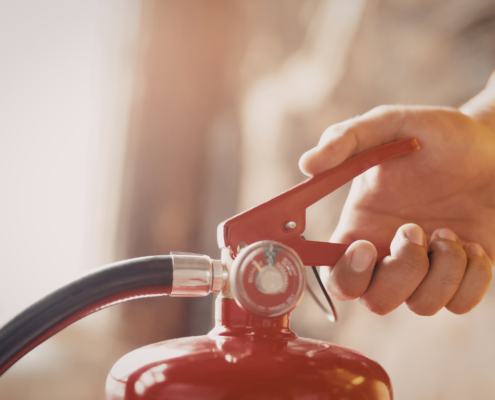
Train your team. Everyone should know PASS. Pull, Aim, Squeeze, Sweep.
Inspect your equipment. Extinguishers do not check themselves. You must inspect them regularly.
When in doubt, get out. Portable extinguishers are meant for small fires. If the fire grows, evacuate immediately and call emergency services.
Final Word
Fire safety is about preparation, not reaction. The right extinguisher, used at the right time, can help control a fire. But your priority must always be life safety.
If you are not sure your site is properly protected, let us help. We will walk your space and show you where you stand. The first step to prevention is knowing where you are today.