Fire Safety for Hospitals, Clinics, and Patient-Care Environments
In healthcare settings, a fire emergency threatens more than property. It endangers individuals who may be unable to self-evacuate. Facilities like hospitals and nursing homes require fire safety systems that provide early detection, explicit notification, and dependable suppression.
We design, install, inspect, repair, and monitor systems built to support essential healthcare operations, such as:
- Pharmacies and labs.
- Patient rooms and care wings.
- Imaging and diagnostic areas.
- Operating rooms and surgical suites.
- Long-term care and assisted living facilities.
At National Fire & Safety, we provide annual inspections, repairs and maintenance, and rapid response times. Our team ensures every system supports safe egress, continuous operation of essential equipment, and compliance with the latest healthcare fire protection codes.
Hospital-Grade Fire Alarm and Notification Systems
Reliable early-warning detection is critical in healthcare environments. National Fire & Safety offers comprehensive fire alarm solutions for hospitals and medical campuses, including system design, installation, programming, and ongoing inspections.
Your fire alarm system plays a central role in:
- Alerting staff to initiate emergency procedures.
- Meeting National Fire Protection Association (NFPA), Centers for Medicare & Medicaid Services (CMS), and Joint Commission requirements.
- Supporting orderly evacuation or defend-in-place protocols.
- Integrating with access control, elevators, and emergency power systems.
Whether you need a new fire alarm system for hospitals or require ongoing maintenance for your existing infrastructure, we deliver compliant solutions tailored to your facility’s needs.
Healthcare Fire Sprinkler and Suppression Systems
Hospitals, clinics, and nursing homes depend on suppression systems to help control a fire. We provide comprehensive solutions for healthcare fire sprinkler systems, including wet, dry, pre-action, and specialized configurations tailored to sensitive environments.
Our services include:
- Repairs, testing, and emergency response.
- System design for new construction and retrofit.
- Annual and semiannual inspections required for accreditation.
- Installations that support medical equipment layouts and building constraints.
Whether you need a hospital sprinkler system upgrade or full-facility replacement, our team delivers high-quality craftsmanship backed by unwavering vigilance.
Life Safety Compliance for Healthcare Facilities
Healthcare fire protection is tightly regulated, and National Fire & Safety helps your facility remain ready for every audit, inspection, and accreditation cycle.
We assist with:
- Documentation management.
- NFPA 99 and NFPA 101 requirements.
- 24/7 monitoring for continuous oversight.
- Deficiency correction and system upgrades.
- CMS and Joint Commission fire safety compliance.
Why Healthcare Facilities Trust National Fire & Safety
Healthcare environments operate under precise standards, and so do we. Facilities managers and safety leaders rely on us because we provide:
- Rapid emergency response.
- Over 70 years of industry expertise.
- Tailored solutions for complex patient-care environments.
- Clear communication and compliance-focused documentation.
- A single trusted partner for alarms, sprinklers, inspections, repairs, and monitoring.
Request a Consultation
At National Fire & Safety, we help you limit liability, reduce risk, and maintain confidence in your fire and life safety systems. Protect your patients, staff, and facility with a fire protection partner you can count on. Request your free quote to get started.








Fireproofing Construction Projects: What Builders Need to Know
Company News[6 min read]
Fireproofing is more than just a regulatory requirement—it’s a crucial element in ensuring the safety, longevity, and legal compliance of any construction project. Proper fireproofing helps protect not just the structure but also the occupants, significantly reducing the risk of devastating losses, legal liabilities, and rising insurance costs. For instance, the Grenfell Tower fire in London in 2017 highlighted how inadequate fireproofing can contribute to catastrophic events, prompting widespread regulatory changes.
For builders, understanding the intricacies of fireproofing can make all the difference between a project that stands the test of time and one that poses serious risks. This guide will break down key fireproofing techniques, compliance requirements, and best practices, ensuring that construction teams are equipped to make informed decisions.
Understanding Fireproofing: What It Is & Why It Matters
Fireproofing involves the application of materials designed to prevent or slow the spread of fire, giving occupants more time to evacuate and reducing damage to the structure. It’s important to note that fireproofing differs from fire-resistant materials, such as concrete or gypsum board. Fireproofing typically refers to coatings, sprays, and barriers that are applied to structures to enhance fire resistance, whereas fire-resistant materials are non-combustible substances that naturally resist fire damage.
In construction, fireproofing materials can be categorized into two types: passive protection and active protection. Passive fire protection includes elements like fire-resistant coatings and insulating materials that help slow the spread of fire, whereas active protection involves systems such as sprinklers, alarms, and suppression technologies that respond actively to fire incidents.
Key Fireproofing Techniques in Construction
The choice of fireproofing method depends on the specific requirements of the project. Builders should consider various techniques based on their structure and the desired fire rating. For example, spray-applied fire-resistive materials (SFRM) are often used for steel structures and are cost-effective, although they can degrade in high humidity. On the other hand, intumescent coatings, which are typically used for exposed steel and aesthetic applications, expand with heat and provide a thinner layer of protection but come at a higher cost. Fire-resistant boards, commonly applied to walls and ceilings, are easy to install but require additional support, while concrete and masonry offer naturally fire-resistant properties but tend to be heavier and more expensive.
Fireproofing Code Compliance & Regulations
Fireproofing regulations are in place to ensure safety, and meeting these standards is critical to avoid costly rework. Builders must adhere to codes such as the International Building Code (IBC), which outlines fireproofing requirements for various structure types, and Occupational Safety and Health Administration (OSHA) standards, which govern material handling and worker safety. The National Fire Protection Association (NFPA) also provides valuable guidelines on firestopping and material performance.
To ensure compliance, builders should verify that materials meet necessary standards and that installation aligns with local codes. Documenting inspections and certifications is also essential to maintain a compliant project. Training teams on proper fireproofing application is key to minimizing errors and ensuring consistent results throughout the project.
Challenges & Best Practices in Fireproofing Construction Projects
Achieving long-term success in fireproofing requires careful attention to detail, avoiding common mistakes that could lead to compliance failures. For example, using non-certified materials, inconsistent application thickness, or neglecting to properly firestop small gaps can compromise the effectiveness of the fireproofing system. To mitigate these risks, it is essential to work with certified fireproofing contractors and implement regular inspections and maintenance. Additionally, choosing materials tailored to the structure’s specific fire rating needs will ensure the fireproofing system performs as intended.
Post-Construction Inspections & Documentation
Once the construction is complete, inspections are crucial to verify that the fireproofing measures have been properly applied and meet code requirements. Licensed fire protection engineers or third-party inspectors are often needed to assess whether the materials used are in compliance with fire-resistant ratings and whether firestopping installations are properly implemented. These inspectors will verify the correct application of fireproofing materials, ensuring that the building’s safety standards are met.
In addition to inspections, documenting fireproofing compliance is an essential step for future inspections, insurance purposes, and potential liability claims. Builders should keep detailed records of all fireproofing materials used, including product data sheets and compliance certificates. It’s also important to document the installation process, including photographs of the application stages and inspection reports. This documentation helps provide evidence of compliance should any issues arise in the future, such as during a building inspection or insurance claim.
Maintaining Fireproofing Integrity After Construction
Fireproofing systems are not immune to damage over time, whether from other phases of construction or general wear and tear. After the building is complete, it’s important to assess the integrity of the fireproofing system regularly. If fireproofing is damaged, whether by mechanical impact or exposure to moisture, it is critical to repair or reapply the necessary materials promptly to maintain the building’s fire-resistance capabilities.
Builders should also be aware of how to remediate damaged fireproofing and ensure that repairs restore the protective qualities of the material. For example, after addressing any damage, it’s essential to conduct follow-up inspections to confirm that the fireproofing is fully restored to its required rating.
Innovations & Future Trends in Fireproofing
The fireproofing industry is constantly evolving, with advancements in technology leading to more efficient and sustainable solutions. For instance, AI-powered fire risk assessment tools are improving risk detection and compliance tracking, while self-healing fireproof coatings are being developed to regenerate their protective layer after exposure to heat. Eco-friendly fireproofing solutions are also on the rise, reducing environmental impacts while maintaining high performance.
The fireproofing market is projected to reach USD 2.5 billion by 2032, driven by stricter safety regulations and continuous technological advancements in materials and application methods.
Effective fireproofing is not only about adhering to code requirements—it’s an investment in safety, longevity, and financial protection. By selecting the right fireproofing materials, following best practices, and staying ahead of industry trends, builders can ensure their projects meet the highest standards of fire safety and durability.
For expert advice tailored to your construction project, contact National Fire & Safety today to schedule a consultation!
title_attr=” button_type=” link=’page,30′ link_dynamic=” link_target=” download_file=’https://’ attachment=” attachment_size=” downloaded_file_name=” size=’small’ position=’center’ label_display=” size-text=” av-desktop-font-size-text=” av-medium-font-size-text=” av-small-font-size-text=” av-mini-font-size-text=” margin=” margin_sync=’true’ padding=” padding_sync=’true’ av-desktop-margin=” av-desktop-margin_sync=’true’ av-desktop-padding=” av-desktop-padding_sync=’true’ av-medium-margin=” av-medium-margin_sync=’true’ av-medium-padding=” av-medium-padding_sync=’true’ av-small-margin=” av-small-margin_sync=’true’ av-small-padding=” av-small-padding_sync=’true’ av-mini-margin=” av-mini-margin_sync=’true’ av-mini-padding=” av-mini-padding_sync=’true’ color_options=” color=’custom’ custom_bg=’#bf7d13′ custom_font=’#ffffff’ btn_color_bg=’theme-color’ btn_custom_grad_direction=’vertical’ btn_custom_grad_1=’#000000′ btn_custom_grad_2=’#ffffff’ btn_custom_grad_3=” btn_custom_grad_opacity=’0.7′ btn_custom_bg=’#bf7d13′ btn_color_bg_hover=’theme-color-highlight’ btn_custom_bg_hover=’#bf7d13′ btn_color_font=’theme-color’ btn_custom_font=’#ffffff’ btn_color_font_hover=’white’ btn_custom_font_hover=’#ffffff’ border=” border_width=” border_width_sync=’true’ border_color=” border_radius=” border_radius_sync=’true’ box_shadow=” box_shadow_style=’0px,0px,0px,0px’ box_shadow_color=” animation=” animation_duration=” animation_custom_bg_color=” animation_z_index_curtain=’100′ hover_opacity=” sonar_effect_effect=” sonar_effect_color=” sonar_effect_duration=’1′ sonar_effect_scale=” sonar_effect_opac=’0.5′ css_position=” css_position_location=’,,,’ css_position_z_index=” av-desktop-css_position=” av-desktop-css_position_location=’,,,’ av-desktop-css_position_z_index=” av-medium-css_position=” av-medium-css_position_location=’,,,’ av-medium-css_position_z_index=” av-small-css_position=” av-small-css_position_location=’,,,’ av-small-css_position_z_index=” av-mini-css_position=” av-mini-css_position_location=’,,,’ av-mini-css_position_z_index=” id=” custom_class=” template_class=” av_uid=’av-7iyh1-1′ sc_version=’1.0′ admin_preview_bg=”]
Emergency Exit & Egress Planning: Why It’s Critical for Workplace Safety
Fire SafetyWhen it comes to workplace safety, many elements are often overlooked until it’s too late. One of the most crucial aspects that should never be neglected is emergency exit and egress planning. Having an effective strategy in place can mean the difference between life and death in the event of an emergency.
Emergencies are unpredictable. They can strike at any time—whether it’s a fire, a chemical spill, or even a natural disaster. In such cases, the safety and well-being of employees depend on how quickly they can evacuate the building. That’s where emergency exit and egress planning comes in. This involves designing and implementing clear, well-communicated paths for all personnel to safely exit the premises in a time of crisis.
What is Emergency Exit & Egress Planning?
Emergency exit planning refers to the creation of clear, accessible routes that employees can use to evacuate a building in case of an emergency. Egress planning extends this concept, focusing on the ability of all individuals, including those with disabilities, to evacuate safely and efficiently. Proper planning also involves ensuring that exits are not blocked, signage is visible, and safety procedures are well-communicated and understood by everyone.
The Importance of Emergency Exit & Egress Planning
Life-Saving Efficiency
In an emergency, seconds count. Effective emergency exit and egress planning can significantly reduce evacuation time and help employees reach safety quickly. Whether it’s a fire, gas leak, or active shooter situation, having designated exit routes and evacuation procedures can help save lives by guiding everyone to safety without chaos or confusion.
Fire Safety Systems: Integral to Evacuation
In many cases, fire is one of the most dangerous threats in the workplace. Fire alarm systems, sprinklers, and fire suppression equipment are vital components that complement exit and egress planning. Automatic sprinklers are often the first line of defense, controlling fires before they spread, allowing more time for evacuation. Fire alarms, when coupled with voice evacuation systems, can ensure that employees are alerted and guided efficiently to safety. It’s critical that employees are trained not only to evacuate but to understand the role these systems play in their safety, especially when fire hazards are present.
Compliance with Legal Regulations
Occupational Safety and Health Administration (OSHA) and other regulatory bodies have strict guidelines for workplace safety, including emergency exits and fire protection systems. Employers who fail to comply with these regulations may face hefty fines or legal consequences, not to mention the reputational damage from any incidents that occur due to improper safety measures. Regular fire drills and inspections of fire systems are essential to ensure compliance and preparedness.
Accessibility for All Employees
Ensuring that everyone in the workplace can evacuate safely is paramount. This includes considering individuals with mobility impairments, vision or hearing disabilities, and other unique needs. An effective egress plan will accommodate all employees, ensuring that every person can exit the building without delay or risk. In conjunction with emergency exit planning, fire alarms should be both audible and visual, ensuring that employees with hearing impairments are alerted in the event of a fire.
Muster System- Pre-arranged meeting place once evacuated:
An effective fire evacuation muster system ensures quick and accurate accounting of personnel after an evacuation, aiding in identifying missing individuals and facilitating a swift rescue response. These systems typically involve designated muster points, technologies like RFID readers or mobile apps, and clear communication protocols.
Reduced Risk of Panic
In an emergency, panic can spread quickly, especially if people are unsure of how to safely exit the building. Clear, well-marked exit routes, combined with effective fire suppression and alarm systems, reduce the likelihood of panic, ensuring that employees can stay calm and follow procedures. Fire safety systems like strobe lights, emergency lighting, and audible alarms provide critical cues to guide individuals to safety.
Employee Confidence
A company that prioritizes emergency exit and egress planning demonstrates that it values the safety of its employees. This increases employee morale and confidence, knowing that their well-being is a top priority. Additionally, employees who know that the company is equipped with functional fire safety systems, including sprinklers and alarms, will feel even more secure in their workplace.
Key Considerations for Effective Emergency Exit & Egress Planning
Multiple Exit Routes
In any building, there should be multiple exit routes to ensure that employees are not funneled into one path. This is especially important if one exit becomes blocked due to fire, smoke, or debris. Designating several exits allows for more flexibility in the evacuation process, and the presence of fire-rated exits equipped with fire doors and sprinklers can help delay the spread of fire and offer additional time for safe evacuation.
Clear Signage
Clear, visible signage is essential to guide employees to the nearest exit. Signs should be well-lit and visible at all times, even during a power outage. This includes exit signs, floor plans, and directional arrows. Emergency lighting should also be installed in areas that may be affected by smoke or fire, ensuring that employees can see their way to safety, even in low visibility conditions.
Regular Drills
Planning alone isn’t enough. Employees must practice emergency evacuation regularly through fire drills and other exercises. These drills will help them familiarize themselves with the exit routes and procedures, reducing the chances of confusion during a real emergency. Fire drills should simulate real emergency scenarios, including evacuations triggered by fire alarms, allowing employees to practice their response to fire safety systems in action.
Barrier-Free Egress Paths
Obstructions can block evacuation routes, making it impossible for employees to exit safely. Emergency exits and pathways should be free of barriers, such as furniture, equipment, or clutter, to ensure a quick, unimpeded evacuation. Ensure that fire exit routes are not obstructed by non-compliant storage or temporary fixtures, which could hinder the effectiveness of the fire alarm and sprinkler systems in case of an emergency.
Muster Points
An effective fire evacuation muster system ensures quick and accurate accounting of personnel after an evacuation, aiding in identifying missing individuals and facilitating a swift rescue response. These systems typically involve designated muster points where employees gather once they have exited the building. Technology plays a crucial role in improving the efficiency of muster systems, with RFID readers scanning employee badges to track attendance and mobile mustering apps allowing employees to check in via their phones or tablets. Real-time tracking systems provide instant updates on personnel locations, giving first responders valuable information during an emergency. Effective communication is also essential, with mass notification systems sending alerts via SMS, email, or PC pop-ups to inform employees of the evacuation and muster point locations. Two-way communication channels enable personnel to report their status and receive updates, ensuring a more coordinated response. Additionally, real-time headcounts and muster reports help organizations track who is present, missing, or in need of assistance.
Benefits of an Effective Muster System:
Implementing an effective muster system offers several key benefits. Enhanced safety ensures that everyone is accounted for during an emergency, reducing panic and improving response coordination. Faster response times allow first responders to focus on rescue efforts rather than searching for missing individuals. Improved compliance helps organizations meet regulatory requirements for emergency preparedness, while streamlined evacuation drills enhance procedural efficiency and readiness. Finally, accurate real-time information on personnel status is crucial for effective emergency management, enabling organizations to make informed decisions and respond swiftly to evolving situations.
Review and Update Plans
As workplace layouts change and new employees are hired, it’s critical to update emergency exit and egress plans regularly. Reviewing these plans ensures that they remain effective and relevant for the current work environment. Additionally, regular testing and maintenance of fire safety systems—such as fire alarms, sprinklers, and emergency lighting—ensure that they will function properly when needed.
Emergency exit and egress planning are more than just boxes to check on a safety compliance list. They are essential components of a comprehensive workplace safety program that protects the most valuable asset a company has—its people. By ensuring that exit routes are clearly marked, easily accessible, and practiced regularly, employers can safeguard their employees in times of crisis, minimize risk, and comply with necessary regulations.
When combined with reliable fire safety systems, such as sprinklers, alarms, and suppression systems, an effective egress plan enhances the safety of employees during critical situations. Remember, in a workplace emergency, every second matters. The best time to plan is now, not when disaster strikes.
To ensure your workplace is fully prepared for any emergency, trust NF’s expertise in fire safety and egress planning. Our team provides comprehensive solutions, from designing clear evacuation routes to integrating advanced fire suppression and alarm systems. Whether you need a safety audit, compliance review, or a customized emergency response plan, NFS is here to help safeguard your employees and business.
Contact us today to enhance your workplace safety and ensure you’re always ready for the unexpected.
The Importance of Routine Fire Safety Inspections
Fire Safety[4 min read]
Did you know workplace fires cause over $2 billion in property damage each year? Many of these fires could have been prevented with one simple step: regular fire safety inspections. Fire safety isn’t just a recommendation—it’s a necessity. In this blog, we’ll explore why routine fire safety inspections are crucial for your business, what to check during inspections, and the risks of neglecting them.
Why Fire Safety Inspections Matter
Regular fire safety inspections are key to identifying hidden fire hazards. Even minor issues—like faulty wiring or blocked exit routes—can quickly turn into serious problems. By taking a proactive approach, you can save lives, protect property, and keep your business running smoothly. The goal is to catch potential hazards before they turn into emergencies.
In addition to safety, fire inspections help businesses comply with both local and federal fire safety regulations. Routine checks ensure your business meets these legal requirements, protecting your employees and preventing costly fines or legal issues.
Pro Tip: Regular inspections may even lower your insurance premiums, as insurers appreciate businesses that take preventive measures.
By prioritizing fire safety, you’re not only protecting your employees and customers but also fostering a safer work environment. A secure workplace boosts employee confidence and loyalty while reducing the risk of fires.
What to Check During Fire Safety Inspections
Fire Extinguishers
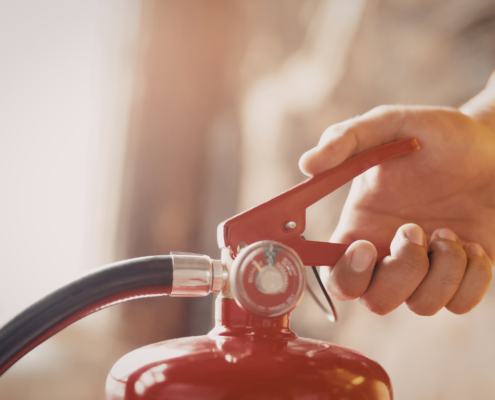
On a monthly basis, ensure fire extinguishers are accessible, the pressure gauge is in the green zone, and the inspection tags are up to date.
Actionable Tip: Set a monthly reminder to check all fire extinguishers with your team. This simple task ensures they’re ready when you need them most.
Smoke Detectors and Alarms
Test alarms to make sure they’re working properly. Check battery life and ensure detectors are placed according to safety standards.
Actionable Tip: Test your smoke alarms monthly. A functioning alarm can make all the difference during an emergency.
Exit Routes and Emergency Evacuation Plans
Make sure all exits are clear, accessible, and properly marked. Emergency evacuation plans should be up to date.
Actionable Tip: Review your evacuation plan with your team every six months and conduct regular fire drills to ensure everyone knows what to do in case of a fire.
Electrical Systems, Wiring, and Extension Cords
Extension cords are for temporary use only and should not replace permanent wiring solutions. Choose the right cord for the job—ensure it meets the amperage requirements of the appliance or tool. Use indoor cords only indoors. Regularly inspect cords for damage, such as frayed wires, cracked insulation, or loose plugs. Replace damaged cords immediately. Never overload extension cords, as overheating can create a fire hazard.
Actionable Tip: Check for signs of wear and tear, exposed wires, or overloaded circuits—electrical issues are often hidden fire risks.
Space Heaters
Keep space heaters at least three feet away from flammable materials such as paper, curtains, and furniture. Use only space heaters with automatic shut-off features. Never leave a space heater unattended while in use.
Actionable Tip: Assign a team member to perform a monthly electrical safety check, including inspecting wiring, extension cords, and outlets. Encourage employees to report damaged cords or unsafe electrical practices immediately.
Fire Sprinkler Systems
Ensure sprinklers are unobstructed and functioning properly.
Actionable Tip: Have your fire sprinkler system professionally inspected annually to ensure it’s ready to operate in an emergency.
Hazardous Materials Storage
Safely store flammable or combustible materials away from heat sources.
Inspections should be conducted at least once a year by a certified professional, but smaller checks should be done more frequently.
NFS Tip: Set up a routine calendar for monthly, quarterly, and annual inspections to stay organized. This ensures that no issue goes unnoticed and your workplace remains compliant.
Routine vs. Comprehensive Inspections
Routine checks (monthly) should focus on easily visible issues, such as fire extinguishers and alarm batteries. Comprehensive inspections (annually) delve deeper into your systems and infrastructure.
NFS Tip: Schedule detailed inspections ahead of time to ensure everything is thoroughly checked. Professional inspectors can spot hidden risks that may not be obvious to the untrained eye.
The Role of Professional Fire Safety Inspectors
Expertise in Identifying Risks
Certified inspectors are trained to identify fire risks that might be overlooked by others. They use advanced tools and techniques to assess your systems and structures, ensuring your fire safety measures meet industry standards.
Cost-Saving Benefits
Regular professional inspections help you avoid costly repairs, fines, and potential insurance claims. Early detection of issues saves your business money by preventing expensive fires or penalties.
NFS Tip: Hiring a professional inspector ensures your systems meet all legal requirements and maximizes your insurance coverage.
What Happens If You Skip Inspections?
Increased Risk of Fire and Property Damage
Neglecting fire safety inspections can lead to catastrophic fires, resulting in extensive property damage, equipment loss, or even loss of life.
Legal and Financial Penalties
Failure to comply with fire safety regulations can result in hefty fines or even legal action.
NFS Tip: Non-compliance may also lead to higher insurance premiums or denied claims if a fire occurs. Fire safety inspections are essential for both safety and legal compliance.
Reputation Damage
Beyond the financial and legal consequences, a fire can severely damage your business’s reputation. Customers may be reluctant to return to a business with a poor safety record, especially if the fire was avoidable. Prioritizing fire safety builds trust with both customers and employees.
Fire safety inspections are about more than just compliance—they’re about safeguarding your employees and protecting your business from preventable risks. Don’t wait for disaster to strike. Schedule a fire safety inspection today to ensure your business is safe, compliant, and ready for the future.
Ready to schedule a comprehensive fire safety inspection? Contact National Fire & Safety today to let our certified professionals help safeguard your business.