Fire Safety for Hospitals, Clinics, and Patient-Care Environments
In healthcare settings, a fire emergency threatens more than property. It endangers individuals who may be unable to self-evacuate. Facilities like hospitals and nursing homes require fire safety systems that provide early detection, explicit notification, and dependable suppression.
We design, install, inspect, repair, and monitor systems built to support essential healthcare operations, such as:
- Pharmacies and labs.
- Patient rooms and care wings.
- Imaging and diagnostic areas.
- Operating rooms and surgical suites.
- Long-term care and assisted living facilities.
At National Fire & Safety, we provide annual inspections, repairs and maintenance, and rapid response times. Our team ensures every system supports safe egress, continuous operation of essential equipment, and compliance with the latest healthcare fire protection codes.
Hospital-Grade Fire Alarm and Notification Systems
Reliable early-warning detection is critical in healthcare environments. National Fire & Safety offers comprehensive fire alarm solutions for hospitals and medical campuses, including system design, installation, programming, and ongoing inspections.
Your fire alarm system plays a central role in:
- Alerting staff to initiate emergency procedures.
- Meeting National Fire Protection Association (NFPA), Centers for Medicare & Medicaid Services (CMS), and Joint Commission requirements.
- Supporting orderly evacuation or defend-in-place protocols.
- Integrating with access control, elevators, and emergency power systems.
Whether you need a new fire alarm system for hospitals or require ongoing maintenance for your existing infrastructure, we deliver compliant solutions tailored to your facility’s needs.
Healthcare Fire Sprinkler and Suppression Systems
Hospitals, clinics, and nursing homes depend on suppression systems to help control a fire. We provide comprehensive solutions for healthcare fire sprinkler systems, including wet, dry, pre-action, and specialized configurations tailored to sensitive environments.
Our services include:
- Repairs, testing, and emergency response.
- System design for new construction and retrofit.
- Annual and semiannual inspections required for accreditation.
- Installations that support medical equipment layouts and building constraints.
Whether you need a hospital sprinkler system upgrade or full-facility replacement, our team delivers high-quality craftsmanship backed by unwavering vigilance.
Life Safety Compliance for Healthcare Facilities
Healthcare fire protection is tightly regulated, and National Fire & Safety helps your facility remain ready for every audit, inspection, and accreditation cycle.
We assist with:
- Documentation management.
- NFPA 99 and NFPA 101 requirements.
- 24/7 monitoring for continuous oversight.
- Deficiency correction and system upgrades.
- CMS and Joint Commission fire safety compliance.
Why Healthcare Facilities Trust National Fire & Safety
Healthcare environments operate under precise standards, and so do we. Facilities managers and safety leaders rely on us because we provide:
- Rapid emergency response.
- Over 70 years of industry expertise.
- Tailored solutions for complex patient-care environments.
- Clear communication and compliance-focused documentation.
- A single trusted partner for alarms, sprinklers, inspections, repairs, and monitoring.
Request a Consultation
At National Fire & Safety, we help you limit liability, reduce risk, and maintain confidence in your fire and life safety systems. Protect your patients, staff, and facility with a fire protection partner you can count on. Request your free quote to get started.






Fire Safety Essentials Every College and University Campus Should Know
Higher Education[6 min read]
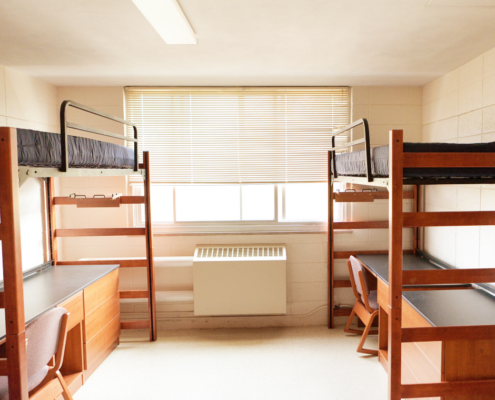
Fire safety is a critical part of campus life, yet it is often overlooked until an incident occurs. Imagine a student in a residence hall who accidentally leaves a crockpot on overnight. Smoke begins to fill the kitchen, alarms sound, and the building must be evacuated immediately. Thanks to proper planning, preparation, and training, the situation is contained without injuries or property loss. This scenario highlights why fire safety must be embedded into every aspect of campus operations, from dormitories and laboratories to lecture halls and recreational spaces. A campus that prioritizes safety can prevent small mistakes from turning into major emergencies.
Understanding Campus Fire Safety
College and university campuses are complex environments. They combine residential areas, classrooms, research laboratories, recreational facilities, and dining halls. Students, faculty, and staff frequently move between these areas, creating a dynamic and sometimes unpredictable environment. Large gatherings in lecture halls, auditoriums, or student centers increase the potential for accidents. The variety of building types, ages, and layouts makes comprehensive planning essential. Fires can escalate rapidly if safety systems, evacuation plans, and communication protocols are not clearly established, maintained, and understood by the entire community. Beyond regulatory compliance, these measures protect lives, reduce the risk of property damage, and foster a culture of safety that benefits everyone on campus.
Building a Strong Foundation for Safety
A comprehensive fire safety program begins with functioning detection and suppression systems. Smoke alarms, fire sprinklers, and fire extinguishers are essential tools, but they only provide protection when properly maintained and tested. Scheduling regular inspections and maintenance checks ensures that these systems perform reliably when needed. Clear and accessible evacuation routes are equally important. Maps and signage should be posted in every building, and all members of the campus community should be familiar with exit locations. Accessibility for students and staff with disabilities must be considered in every building plan.
Education and awareness are vital. Every student, faculty member, and staff employee should know how to respond to alarms, locate emergency equipment, and report hazards promptly. Orientation sessions for new students, ongoing workshops for faculty, and training for resident advisors help reinforce safety procedures. This knowledge ensures that in the event of an emergency, people act confidently and calmly, reducing risk and preventing chaos.
Drills and Practice for Real-World Scenarios
Evacuation drills are more than a compliance requirement. They prepare the campus community to respond quickly and safely during emergencies. By conducting drills in different types of buildings and at varying times of day, campuses can simulate realistic scenarios, such as a fire in a high-occupancy lecture hall or a blocked exit during a crowded event. Drills help identify potential bottlenecks, reveal weaknesses in current procedures, and provide opportunities to improve emergency response plans. Regularly reviewing drill outcomes and sharing lessons learned with students and staff reinforces the importance of safety and encourages proactive participation.
Daily practices also play a critical role in preventing fires. Students should never leave cooking appliances unattended, ensure that electrical outlets are not overloaded, and store flammable materials safely. Faculty and staff should maintain clear access to exits, monitor equipment in laboratories, and model safe behavior in classrooms and offices. Encouraging everyone to report potential hazards promptly allows the campus to address small issues before they become serious risks.
Anticipating Challenges and Planning Ahead
Even the most thorough fire safety program can encounter unexpected challenges. Campuses should consider “what if” scenarios and plan accordingly. What if a fire alarm goes off during a large campus event, such as a concert or graduation ceremony? How would students with mobility challenges evacuate quickly and safely? What if a sprinkler system malfunctions or a fire extinguisher is out of service? Incorporating these scenarios into drills and training ensures that every individual knows their role and that campus leaders can respond efficiently. Proactive thinking and detailed planning reduce uncertainty and ensure a higher level of preparedness.
Fostering a Safety-Oriented Culture
Safety is most effective when it becomes a shared value across the campus. Students, faculty, and staff all have a role to play in fostering a culture of fire safety. By participating in drills, attending workshops, and maintaining vigilance in everyday activities, members of the campus community reinforce safe behaviors. Leadership at all levels, from department heads to resident advisors, should model these behaviors and encourage accountability. Recognition programs that highlight individuals or groups who demonstrate commitment to safety can motivate others to follow suit, creating a campus culture where fire safety is prioritized every day.
Fire safety begins with awareness, preparation, and consistent practices. Every student, faculty member, and staff member contributes to a safer environment by understanding protocols, following guidelines, and remaining vigilant. Implementing these core safety essentials lays the foundation for a secure, resilient, and responsible campus community. A campus that takes proactive steps to educate, prepare, and engage its community in fire safety protects not only lives but also property and the overall learning environment.
Contact National Fire & Safety to ensure your campus has the essential fire safety measures in place.
Common Fire Code Violations and How to Avoid Them
Fire Safety[5 min read]
At National Fire & Safety, the team has spent decades working alongside general contractors, installers, inspectors, and property managers on projects of every size. From new construction to renovations to tenant turnovers, one thing remains clear: most fire code violations are not the result of negligence. They happen when small details are overlooked.
Fire code compliance is essential for protecting people, property, and business operations. When systems are outdated or inspections are missed, the consequences can include delayed approvals, fines, and unnecessary safety risks. Even well-managed properties can gradually fall out of compliance if fire protection requirements are not regularly reviewed.
Some of the most common issues found during inspections include blocked exits, expired fire extinguishers, malfunctioning alarm systems, and missing inspection records. While these may seem minor, their impact can be significant. For example, storage placed in front of an exit door can create a violation that delays tenant occupancy.
Many of these issues develop during normal building operations. Tenants rearrange spaces, contractors make updates, and equipment gets moved. Over time, a building that was once compliant can slowly drift out of alignment with fire code requirements. Without consistent oversight, small changes can accumulate into major problems.
The Cost of Non-Compliance
Even small oversights can lead to significant fines, project delays, or liability risks. For example, a blocked exit or expired fire extinguisher can result in failed inspections that delay tenant move-ins or construction approvals. In worst-case scenarios, non-compliance can expose property owners to legal liability if an incident occurs. Taking a proactive approach to fire safety not only ensures compliance but also protects people, saves time, and prevents unnecessary costs.
The best way to prevent violations is to stay proactive. Regular inspections, clear communication with tenants, and working with experienced fire protection professionals all make a difference. Treating fire safety as an ongoing part of property management rather than a one-time task makes compliance much easier to maintain.
National Fire & Safety works closely with property teams to ensure fire protection systems are properly maintained and inspections remain on schedule. With decades of hands-on experience across commercial, healthcare, and multi-tenant properties, the team understands how buildings operate and what inspectors look for. The goal is to make fire safety straightforward so property managers can focus on running their facilities with confidence.
Fire code compliance does not have to be stressful. With the right support and a proactive approach, most issues can be prevented before they become a problem. For guidance on keeping your building safe, compliant, and inspection-ready, contact National Fire & Safety today. The team is here to help every step of the way.
How Often Should Fire Alarms Be Tested?
Fire Safety[4 min read]
Fire alarm systems serve as early-warning devices that alert occupants to danger, aiding in safe evacuation. To ensure they will function as intended when needed, they must undergo regular testing. These tests help detect issues and keep equipment operational in case of an emergency. Knowing how often fire alarms should be tested is essential for compliance, liability reduction, and life-safety protection.
Why Regular Fire Alarm Testing Matters
Fire alarms do not suppress fires, but they do provide early warning and notification, giving occupants time to evacuate and first responders time to act. They are highly valuable, and missed tests increase the risk of delayed alerts, system malfunctions, and noncompliance.
Consistent testing supports safer facilities, limits liability, and ensures systems will perform when needed. Documentation from inspections also protects property owners during insurance reviews and regulatory audits.
Fire Alarm Testing Frequency
There’s no exact frequency for how often a company should test its fire alarm. It depends on system type and occupancy. However, annual professional testing is a baseline requirement in nearly all regulated facilities. Additional checks may be required monthly or quarterly for specific components.
In commercial environments, fire alarms are tested at multiple intervals throughout the year. In fact, most businesses are required to conduct periodic testing and maintain detailed documentation to demonstrate compliance. When combined, these visual checks, functional testing, and annual inspections help ensure system reliability.
Devices such as pull stations, notification appliances, and control panels must be checked regularly, with formal inspections performed annually by qualified professionals.
Smoke Alarm Testing and Routine Checks
Smoke alarms also play a critical role in early detection, particularly in residential and mixed-use properties. In general, you should test your smoke alarms monthly by pressing the test button to confirm they are working. Replace the batteries as needed and the entire unit according to the manufacturer’s guidance, often every 10 years.
Regular testing helps identify dead batteries or sensor failures that can reduce effectiveness. It’s important to note, however, that these routine checks complement, but do not replace, professional system testing required in commercial settings.
Understanding NFPA 72 Fire Alarm Testing Requirements
The National Fire Protection Association (NFPA) provides guidance for fire alarm design, installation, maintenance, and testing. Under NFPA 72, fire alarm components typically require annual testing by a qualified fire protection company. Certain devices, such as batteries and supervisory signals, may require more frequent checks.
These standards are widely adopted by local authorities and referenced by the Occupational Safety and Health Administration (OSHA). Meeting NFPA 72 requirements helps ensure systems remain compliant and defensible during inspections, audits, or post-incident investigations. For example, employers who neglect testing may face citations if systems fail during an inspection or an emergency.
Professional Fire Alarm Testing for Peace of Mind
Fire alarm testing is a critical part of protecting people and property. National Fire & Safety provides comprehensive fire alarm testing, inspection, and documentation services aligned with NFPA standards and local code requirements. If you want to schedule a fire alarm test, simply request your free quote.