
Proactive Fire Safety Planning for Higher Education Campuses
Fire safety is most effective when it is forward-looking and strategic. Proactive planning reduces risk, protects property, and ensures that students, faculty, and staff are prepared for emergencies. By anticipating potential hazards, collaborating with experts, and continuously improving systems, campuses create a culture of preparedness that protects everyone and fosters confidence across the community.
Assessing Campus Risks
Each higher education campus is unique, and fire safety planning begins with a thorough assessment of risks. Residential halls, laboratories, kitchens, and high-occupancy classrooms require particular attention due to their higher likelihood of accidents. Event spaces, auditoriums, and gyms also present challenges because of their variable occupancy and complex layouts. Seasonal factors, such as wildfire risk in regions like Arizona, Texas, Utah, and Colorado, should also be considered when developing a comprehensive plan. By mapping these risks, administrators can prioritize resources effectively and identify areas where additional preventive measures or specialized training are necessary.
Risk assessment should include evaluating human behavior as well as physical hazards. For example, how likely are students to leave appliances unattended in dorms? Are laboratory chemicals stored safely? Do large gatherings create bottlenecks at emergency exits? Understanding these dynamics allows the campus to implement proactive measures that prevent incidents before they occur.
Collaboration with Experts
Fire safety is not a solo effort. Collaboration with local fire departments, certified safety professionals, and specialized consultants strengthens preparedness and ensures that protocols align with the latest standards. Joint training sessions, inspections, and audits help identify gaps in coverage, improve response times, and provide practical insights for staff and students. Even without past incidents, campuses can see the benefit of these partnerships through improved drills, faster emergency response, and a higher level of confidence across the community.
Collaboration also fosters communication between departments. Facility managers, campus safety officers, faculty, and residence life staff work together to ensure that policies are understood and enforced consistently. By maintaining open communication channels, campuses can adapt quickly to changes in building occupancy, construction, or staffing that may affect fire safety.
Leveraging Technology
Modern campuses have a range of technological tools that enhance fire safety. Automated alarms, IoT sensors monitoring occupancy or environmental conditions, and software for inspections and maintenance allow campuses to detect issues before they become emergencies. For example, sensors can alert maintenance teams to overheating appliances in dorms or detect smoke in under-monitored areas. Digital records of inspections, training sessions, and drills streamline compliance and help administrators identify trends and areas for improvement. Technology complements human oversight, creating a more robust and reliable safety network.
Continuous Improvement
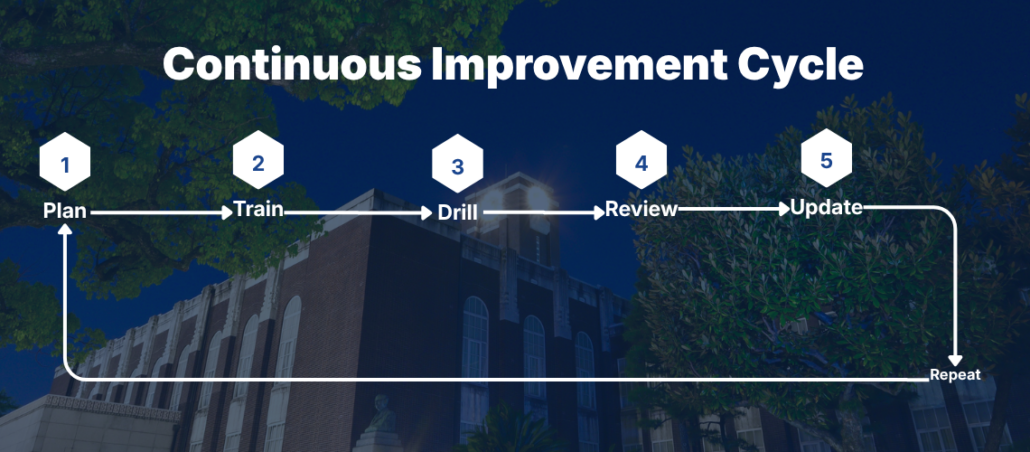
Fire safety planning is not static. Procedures must be regularly reviewed and updated to reflect new construction, renovations, changes in occupancy, or evolving regulations. Drills should be repeated periodically and adapted to reflect different scenarios, such as fires in laboratories, residence halls, or high-traffic events. Feedback from students, faculty, and staff helps identify potential weaknesses and provides opportunities to refine procedures. Continuous improvement ensures that campuses remain prepared as they grow and change, fostering confidence and resilience throughout the community.
Fostering a Culture of Preparedness
A proactive plan is only effective if the campus community embraces it. Education, awareness, and engagement are critical to ensuring that students, faculty, and staff understand their roles. Regular communication, signage, workshops, and participation in drills reinforce the importance of safety as part of daily life. Recognizing proactive behaviors and providing incentives for engagement encourages everyone to take ownership of fire safety, transforming it from a requirement into a shared value.
Conclusion
Proactive fire safety planning protects lives, property, and the campus community as a whole. By assessing risks, collaborating with experts, leveraging technology, and committing to continuous improvement, campuses create resilient safety programs that prepare students, faculty, and staff for emergencies. A forward-looking approach ensures that the campus can respond effectively to any incident while reducing the likelihood of fires and minimizing potential damage.
Contact National Fire & Safety to develop a customized, proactive fire safety plan for your campus.